
War: The Death of Faith
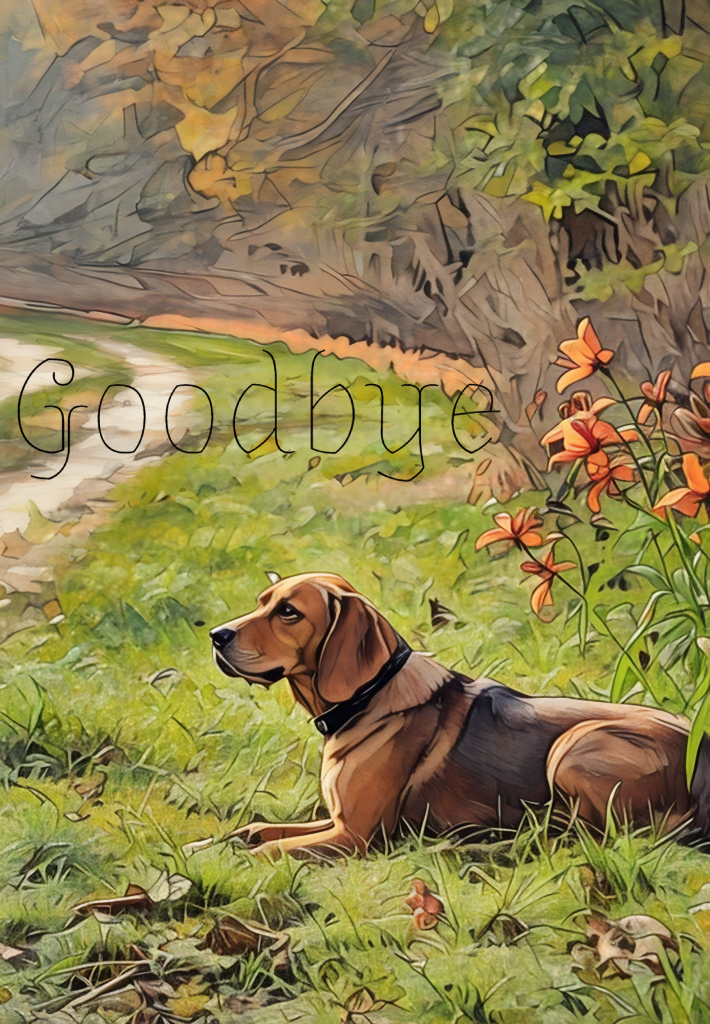
A young man stood the end of the drive, in one hand his agreement to enlist in the United States Army. The other on his coonhound’s head. He took a deep breath through his nose. “I am going to miss that Kentucky air, Blu.” He talked out loud, though the only one that could hear him was his dog. The air was heavy with the scent of Earth, ditch lilies, and coal dust. He knew that all these were part of the makeup of his natural scent. He was an accountant in the coal mines and miner, but he could not choose the death of working the mines. He took another deep breath. Where there was the acrid taste of life that waited for the Kentucky coal mines. There was the sweet reminder of home, of his mother, of his childhood, and of the backwoods town he lived his 25 years of life. But he had only two choices. The backbreaking, lung-destroying work of the mines, or going to war. Which was an unknown leap in the deep, dark, abyss of life.
His father’s and all the hands of his brothers were calloused and full of scars. His hands were callous and full of scars. His father was a typical English man who had been disowned for siding with the North as a young man. The young man did not know at the time, but when he made the choice to join the war, to join the Army, instead of joining his twin brother in the coal mines, all he did was trade one death for another. He stood there waiting for the bus, having said goodbye to his family. His father proud, his oldest brother, who had been in World War I, worried, and his mother full of fear. He fears his oldest brother who was in The Great War knew a death awaited him, but what type was unknown to even someone who had been to war. But even his oldest brother could not imagine what death awaited this young man.
He closed his eyes, he saw the quiet strength in his father’s eyes, it is what a life of hardships and joys brought. His father’s sixteen children after the Civil War where his father fought against his own father and brother. Growing up this young man wanted nothing more to than to emulate that strength to learn to be a man, to bear his own burdens with the same quiet dignity. He had to wonder if he processed the strength his father did, that his oldest brother did, would he be able to bear what he was going to do and see in the war? Would he be able to have that same stoicism? Did he want to have that stoicism? He was standing here trying to show resolute calmness, was this how his father felt when he chose the North against his father and brother? Or how his oldest brother felt when he joined the Army and fought in the Great War?
He scratches Blu’s head. He could hear the mining machines, the constant, rhythmic reminder of the life he chose to leave behind. This was his home. Where he was born, grew up, where he became an adult, and it was the only place he had ever known. The furthest he had traveled from his backwoods town was to Webbyville. He could smell his mom’s cooking and could feel the warmth of her hand on his cheek from where she took his head in her hands and told him he better fight to come home. With all these comforts, there was a quiet desperation, those desperate to escape the life defined owing one’s soul to the company store, of being defined by the coal dust staining one’s lungs, and the need to escape to something more.
He looked out among the trees and the rolling hills, the ditch lilies that grew in abundance, the landscape painted with the reds, oranges, and pinks with the setting sun. Fitting he was leaving at dusk. His days of his childhood behind him. Growing up with stories of how his father met his mother. How he had made the gut-wrenching choice to side with the North against his own father and brothers. His mind played the images of youthful romances, running the hills with his siblings. Remembering how his brother was before The Great War. How his brother came home with a look in his eye he did not understand. But his father had. His father hugged his brother when he came home and squeezed the back of his neck. A rare display of affection and understanding. His father was no older, frail, but his mother still had the spirits of her ancestors, giving her the will to face each day. Would he get to see them again? His parents? His siblings? His brother gave him extra socks; said he would understand sooner than he wanted too about the whys behind that. He took a breath of the Kentucky air as the memories continued to play behind his eyes, his hand on Blu’s head the only thing grounding him to the present.
In the air there was a sense of loss, maybe of innocence he still had at twenty-five, never knowing a world outside of a small not on the map town in Kentucky. This sense of loss he could not help but feel was foreshadowing something. Something dark and finite. His chest tightened with the emotions about choking him. This sanctuary of his youth he was about to leave forever.
When he was a young boy there was this sense of war being about glory or heroism, a romanticized version perhaps. But as he got older, he saw the truth about the toll it took, he saw it in his dad’s eyes. He saw it in his oldest brother’s eyes. He did not understand it. But he knew the reality of war was going to be brutal and give him the unflinching truth about humanity.
Pearl Harbor had been attacked. He remembers sitting around with his siblings, his friends, even his parents, and how there was hushed conversations about the United States getting involved in a second world war, when they were just coming off the Great Depression. Anxieties shimmering, the ever-present shadow of a world at war was threatening to consume their peace. And then it happened. Pearl Harbor had been attacked and the Japanese had awaked a sleeping giant. A sense of patriotism flooded the country and demands to enter the war started.
His hands gripped his enlistment papers, the official documents that felt so crisp and looked so stark in black in white, represented the step from finally leaving the last of his naivety and his youth behind, and his choice to enter an uncertain future. The stark simplicity of his signature was a power statement of that choice. It was a choice that he now was realizing, no matter if he came back home or not, forever altered the trajectory of his life. When his father signed that he would be his next of kin to be notified, it was a silent promise, a vow, he made to his father and mother, to do his damnedest to come home and reunite with the family. It was a hope that felt naïve in the face of war. A naïve vow that even his brother and father knew he may not be able to keep. And even if he came home physically, something of him would always be left on those battle fields.
But this war also gave him the chance to escape the early death the mines promised. It was the lure of this escape, the pull of something different, more potent, an undeniable pull, he had to make this choice. Even not knowing the cost of his decision. Coal mining offered no chance at a different life, something more than an early death due to black lung or a collapse. Though the Army was not a career, it was a choice of fates. Fates gave him no real choice. The pull that if he did not do this, then he would live a life unfulfilled. His future away from the minds, the secret hopes of escape that lived in the back of his mind, they all were intertwined with this choice to enter the war.
This choice was a gamble, a roll of the dice, it would either be the making of who he was to become or his destruction. There was only the solace that he was a stubborn man, he had a steadfast resolve, to face what lay ahead, even if he was just fueled by a mix of desperation and a glimmer of hope there was something more than the coal mines in his future.
The only sounds were the deep breaths he was taking and the thump-thump of Blu’s tail against the dirt road and the tree stump they stood beside. In these final moments before he got onto the bus the weight of the choice he made has pressed down on him, pushing a heavy and inescapable sense he may have made the wrong choice. As the sun continued to set, he looked high into the sky to see the first signs of twilight. The shadows of dusk meeting twilight danced across the landscape, giving the landscape a deeper meaning tonight than he had thought about in ages.
He had yet to open his eyes, and behind his eyelids he saw his father, face etched with pride and concern about what the war would do to his youngest. He saw his mother worried and full of fear this may have been the last time she would see her baby boy. He felt Blu’s warm fur against his fingers. He sighed. That sigh carried the weight of his choice. It was a leap of faith, something that had been shaky as he grew order and had questions. But he had to take this plunge into the unknown, or he knew what his days would be for the rest of his life at those coal mines. It was a despite gamble. Perhaps. He knew he was escaping familiarity, certainty, for the world of violence, uncertainty, and possibly his own death. But if he stayed, he knew he would die in those minds. He nodded his head. He was making the choice that was right at this moment, based upon the information he had at hand.
He knew the possibility was there he would never see this home again. Never see his father again. Never see his mother. Or his siblings. Never hear the streams, the sounds of the mountains, or even hear the coal mines again. All sounds that had been part of the soundtrack of his existence. But there was a strange sense of peace that had blanketed him. He had made the choice, he accepted it, and it was a choice that was irreversible and final. It was the ending of one chapter and the beginning of the next in his life. He did not know what was going to happen. He did not know the future. He was going to war. He was leaving behind Kentucky. And he did not know what lay ahead of him, but he would face it with a quiet strength he had learned from his father and his oldest brother as they battled their own battles with the choices they had made. And it was the same for him. He would fight his battles. And he would win. War waited for now. And with a heavy heart, a resolute mind, this man was prepared to meet this steppingstone into the next chapter of his life.
But as he took one last deep breath and got on the bus saying, “I hope to see you again, Blu.” Giving the dog one final pet on the head, knowing that he may never see his beloved dog again. Little did he know that he would one day say that the date of his death was February 10th, 1942. That the things he would be forced to do, forced to experience, and most of all forced to see, would show him the worst of humanity. And as he stood looking at what one Jewish prisoner carved into the wall of hell itself, ‘If there is a God, he will have to beg my forgiveness,’ his faith died. There was no God. And if there was, he was no better than the evil that happened in this place. And he hoped the people of this hell never forgave a being that would allow humanity to fall to this depravity. And with that it cemented his belief his tombstone should say Jay Nehemiah Fannin October 23t 1916- February 10, 1942. No matter how long he lived. The day he got on the bus, that choice that seemed so freeing, also signed a finite death.
 Kris Charles - Author